The Chilean Coup: Condor and the West
Updated: Feb 19
Did the U.S co-ordinate the Chilean Coup of 1973?
Trigger Warning: The following article contains images (blurred) of physical and sexual torture.
Left Chilean Army troops positioned on a rooftop fire on the La Moneda Palace 11 September 1973 in Santiago. AFP via Getty Images (1973). Chilean army troops positioned on a rooftop fire on the La Moneda presidential palace [Photograph]. Getty Images
Right Tanks in front of the National Congress (1964) of Brazil. Agência Senado. Wikimedia Commons.
Amidst the Cold War, Latin America became a significant battleground for control for the US and USSR. The proximity meant U.S played a strong hand in supporting anti-Communist elements, even if that involved backing authoritarian governments who tortured and killed their own citizens. Post-WWII Latin America had a growing resistance to neocolonial policies which benefitted Western states. There were a number of disparate movements that called for nationalization of resources and foreign owned businesses. These movements threatened economic and political interests of the U.S as they had invested heavily in Latin American industries such as PepsiCo, ITT corporation and the Anaconda mining company. [i] Following the Cuban revolution in 1959 and the disastrous Bay of Pigs invasion the Kennedy administration was in a state of heightened paranoia of communist influence in Latin American politics. The cabinet of the Brazilian President João Goulart become their focus as the Kennedy administration believed Goulart had allowed
“communist or extreme left wing nationalist infiltration”
in the civilian administration and military.[ii]
In reality Goulart was a moderate seeking some progressive reforms, nonetheless his administration was viewed as dangerous as US-Brazilian ambassador Lincoln Gordon put it in classic Cold War terms Goulart was: "equivocal, with neutralist overtones"[iii].

Operation Brother Sam
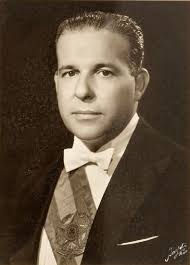
In 1964 the Brazilian military rose up and were assisted by the U.S Navy and Air force who covertly supplied them with weapons and gasoline in a covert operation called Brother Sam spearheaded by Gordon. Minutes of several meetings at the Whitehouse in the leadup to the coup contain discussions of the contingency plans involving the invasion of Brazil by U.S marines to assist the rebel forces if a civil war broke out, though it is still a subject of debate how as to concrete these plans were. [iv] Goulart managed to flee Brazil and died in late 1976 in Argentina from heart failure and the circumstances and timing of his death have led many to claim he was assassinated.[v]Despite successful intervention in Brazil for the U.S the fear of communism only intensified for Latin America when in 1967 the charismatic revolutionary leader Ernesto "Che" Guevara called for the creation of
‘a second or a third Vietnam’
across the world and specifically in Latin America.[vi] This paranoia of a communist wave in Latin America led the U.S to ally with vicious and brutal anti-communist forces in the armed forces who were prepared to do anything to stop the spread of their hated ideology.

Death squads and torture: From the Algerian War to Nicaragua contras
There is a lineage of tactics and techniques used by these groups, taught in places like ‘The School of Americas’ situated in Panama, a military school some critics argue has trained military personnel around the world in the use of torture and human rights abuses. J. Patrice McSherry, a political professor and researcher on Plan Condor notes the similarities in tactics used by governments in fighting insurgencies such as by the French government in the Algerian war, the Guatemalan civil war in 1954 and the Phoenix program in Vietnam in the late 1960s. All of these wars involved acts of torture, death flights, extrajudicial murder and terrorist acts. The French had a permanent military mission in Argentina from 1959 to 1981, in which French veterans of the Algerian war provided training on torture techniques and counterinsurgency. French journalist Marie-Monique Robin claims this French mission provided great benefit to Argentinian intelligence work and listed another connection; a French paramilitary/terrorist organisation called Cité Catholique sent members to take part in anti-communist operations. [vii]
The more things change the more they stay the same: Two photos fifty years apart.
Left: 1952-1962 An Algerian stripped naked and subjected to the actions of five French soldiers, who spread his legs and touch his intimate parts. Source
Right Pfc. Lynndie R. England posing with naked prisoners at the Iraqi Abu Ghraib prison 2004, she was later convicted of prisoner abuse. Source
The British also helped with training military regimes on torture techniques, Brazilian General Ivan de Souza Mendes admitted to researcher Professor Glaucio Soares a researcher who has interviewed many former military during the Brazilian dictatorship that
"The Americans teach, but the English are the masters in teaching how to wrench confessions under pressure, by torture, in all ways. England is the model of democracy. They give courses for their friends"[viii]
These methods were again exported by Argentina to be used in Nicaragua by the US-backed Contras. All these programs shared similarities in torture techniques, in abduction of family, of disappearances, death squads and murder by death flights.
The Chilean Coup
The 1970 Chilean electoral victory of Salvadore Allende, a self-proclaimed Marxist confirmed the worries of the U.S. The CIA had already spent years funding opposition parties and disseminating disinformation about Allende in contrast to the USSR which provided at least $400,000 to the Allende campaign. [ix] With his election the CIA planned new strategies, they assisted Chilean military groups in kidnapping the Commander-in-Chief General René Schneider a loyalist to the constitution and who would be a significant roadblock to a military takeover. The CIA provided arms, grenades and $50,000 in cash for his kidnapping. The plan went further than anticipated and the plot turned to murder.[x] On October 22, 1970, Schneider was gunned down in his car reaching for his pistol.[xi]
The coup came several years later in 1973 September the 11th. It was swift, unified, and violent. Those who were loyal to democracy and the constitution had already been killed or bought off. By 9 o’clock the military controlled most of the country except for Santiago’s city centre where La Moneda, the presidential palace sat. As British made military jets bombarded the palace and loyalist troops fought off infantry units, Allende gave a final defiant address. After, he placed an engraved AK-47, a gift from the Cuban leader Fidel Castro years before, in his mouth and fired.[xii]
Fidel Castro recounted an alternate version to a crowd in Havana a week later. Like an action movie hero, Allende, after having destroyed a tank with a bazooka died fighting in his presidential chair wrapped in the Chilean flag.
His remaining personal guard fought to the death or were executed after the capture of the palace.
Many accuse the CIA as having a direct hand in the coup against Chile which while not entirely accurate they clearly orchestrated the right set of conditions for a military takeover to occur. A phone conversation between President Nixon and Henry Kissinger on September 16, 1973, several days after the coup concludes this:
K: the newspapers are bleeding because a pro-Communist government has been overthrown… I mean instead of celebrating- in the Eisenhower period we would be heroes.
N: Well we didn’t- as you know- our hand doesn’t show on this one though.
K: We didn’t do it. I mean we helped them. [ ] created the conditions as great as possible.[xiii]
Declassification has revealed other Western nations also played a part in destabilizing Chile. The British Information Research Department (IRD) co-ordinated with the CIA for much of their black propaganda campaign before and during the Allende presidency and took part in surveillance of left-wing groups.[xiv]
The Australian Secret Intelligence Service (ASIS) had bases in Chile and in 1974 Prime Minister Gough Whitlam admitted
“when my Government took office Australian intelligence personnel were still working as proxies and nominees of the CIA in destabilizing the Government of Chile”.
ASIS shut its offices following the coup (except for one agent who mysteriously remained in Chile till October) and even now forty years after the fact many details of Australian involvement remain shrouded in secrecy.
After the coup a wave of political violence washed through Chile as thousands of arrests, murders and abductions were carried out. This spread to Argentina where those years marked a period of increased political violence. Juan Perón who had created Peronism, a schizophrenic mixture of socialism, fascism, populism, and orthodoxy,[xv] returned from exile to lead the country 1973 but died shortly after, succeeded by his third wife Isabel.
Isabel and her cabinet presided over a government that increasingly eroded constitutional rights in the name of combatting left wing violence. Members of her cabinet secretly founded and led a right-wing terrorist group (known as the AAA Spanish: Alianza Anticomunista Argentina) who murdered members of the left, a report in 2007 concluded at least 1,122 people were their victims.[xvi]. Despite this, Isabel fell from favour of the military and in March 1976 she was ousted and placed under house arrest. Her cabinet became another set of victims to the intense violence.
U.S and Western Involvement in Condor: How far did they go?
For historians there is a debate on the level of involvement of the U.S., John Dinges is adamant that while the Western governments are complicit in supporting and assisting the Condor states in their operations, they did not have “operational control”.[xviii] That is to say, the CIA and other intelligence agencies did not choose or name targets for these nations but instead shared information, tactics and provided infrastructure such as the Panama base which was decisive in information sharing and tracking. Dinge finds this damning enough, without having to go further in accusing the U.S of orchestrating the whole thing, there are pieces of evidence that indicate that the U.S may have played a greater role in these operations. Perhaps a greater question is whether these are isolated examples or if they reveal a greater level of involvement than previously thought, Carlos Osorio an analyst of the National Security Archive argues that there could be more documents that reveal the U.S had operational control and as there are still remain thousands of classified documents.[xix] This highlights an issue with historical research using declassified files, due to the selective nature of declassification the U.S may release files that don’t significantly damage their reputation. For example, a 1979 report on Foreign intelligence agents in the U.S may hint at more significant involvement when it writes about the head of the Chilean secret police in 1974:
"Shortly after DINA was established, Director [Manuel] Contreras came to the United States to seek American assistance..."
The next 6 lines have been redacted.[xx] These censored paragraphs become fodder for our imagination and make it hard to accurately pinpoint the extent of involvement of the U.S without becoming overtly paranoid.
Letelier-Moffit Assassination
![Montecino, M. (1976). Orlando Letelier, Washington DC, 1976 [Photograph]. Wikimedia](https://static.wixstatic.com/media/3161d7_38c64e563aaf4b5cb7b59da750e3c4f5~mv2.jpg/v1/fill/w_269,h_221,al_c,q_80,enc_avif,quality_auto/3161d7_38c64e563aaf4b5cb7b59da750e3c4f5~mv2.jpg)
Orlando Letelier, one of Pinochet’s most powerful opponents, a former ambassador to the U.S for the Allende government and an influential politician who had been successful in pressuring Western countries to cut aid and investment to Chile if human rights were not upheld. After the coup Letelier had been lucky, he was sent to a remote island for six months until international pressure had him released. Working in Washington D.C, the heart of the U.S he felt he was safe from the reaches of the Pinochet government.
Despite many documents that still remain classified, researchers have found evidence which they believe points to U.S foreknowledge of assassination plots. In mid-1976 intelligence reports trickled through to top U.S officials that warned Condor countries were planning assassinations abroad and so an urgent top-secret cable was written by then Secretary of State Henry Kissinger which was to be passed along by American ambassadors. In the August 23rd cable Kissinger didn’t mince his words stating:
“Government planned and directed assassinations within or outside the territory of Condor members has most serious implications we must face squarely and rapidly”.. he continues later in the document “they [assassinations] would create a most serious moral and political problem”.
[xxi] This cable was in very different tone when compared to Kissinger’s public statements to various heads of state, of course, Kissinger didn’t have to deliver this rebuttal in person and the replies reveal the difficult situation that diplomats found themselves in. Ambassador to Chile David Popper immediately replied to Kissinger’s cable protesting that "given Pinochet's sensitivities…he might well take as an insult any inference that he was connected with such assassination plots." He suggested that DINA director Manuel Contreras was a better person to speak to, arguing that Pinochet may not even be aware of the plots by DINA.[xxii] The reaction by U.S. ambassador to Uruguay, Ernest Siracusa, is even more telling about how uncontrollable the military dictatorships had become. An August 30th memorandum by the Assistant secretary of state for Inter-American affairs Harry Shlaudeman advises Kissinger that the ambassador had refused to deliver the rebuke as he feared it would endanger his life! Shlaudeman then requests that Kissinger send a telegram authorising Siracusa to speak with the Uruguayan Foreign Minister and military commander-in-chief while Shlaudeman speaks to the Uruguayan ambassador in Washington.
What Kissinger did next is what is what made Peter Kornbluh, senior analyst at the National Security Archive and the director of the Chile Documentation Project, accuse Kissinger of blocking actions that could have stopped terrorist actions conducted by DINA. The reply to Shlaudeman came two weeks later on a September 16th with a brief message advising “no further action be taken on this matter."[xxiii] Less than 5 days after the message a car turned off Washington’s Sheridan circle, a regal and imperious stretch of the city, surrounded by towering 19th century mansions that are home to various embassies, and exploded in a torrent of flame and metal.
In the car travelled Orlando Letelier and by fatal chance Ronni Moffit his twenty-five-year-old colleague and her husband Michael; Letelier had given them a lift as their car was being repaired. Witnesses describe the car lifting in the air from the force of the explosion: Michael was blown out of the rear of the car and suffered minor injuries and as he picked himself up he saw his wife stumbling away and believed her to not be injured, he rushed to Letelier who was still in the driver’s seat. The blast had blown Letelier’s legs off and he died within minutes. As they arrived at the hospital Ronni died, a piece of shrapnel had severed her throat and arteries, she had drowned in her own blood. Despite the shock Michael knew who was to blame and told the responding police, it was DINA, the Chilean government, their embassy only a few hundred metres down the road.[xxiv]While there is no direct connection to Kissinger and the bombing it is clear that the CIA and the state department and Kissinger blocked diplomatic attempts to halt the Condor murder operations before they had even gone ahead.
Australian historian Dr. Clinton Fernandes has taken the National Archives of Australia to court multiple times in an attempt better understand the events and Australia’s involvment surrounding the Chilean coup argues
“the Australian government insists on secrecy to avoid having to admit to the Australian public that it helped destroy Chilean democracy”.[xxv]
Charles Horman and Frank Teruggi

The deaths of the journalist Charles Horman and student Frank Teruggi, both U.S citizens, and subject of the highly influential 1982 film Missing are another example of cooperation between the Chileans and U.S., earlier they had come to Chile attracted by the Socialist vision of Allende’s government and were part of a left-wing student newspaper. Horman had been in a coastal resort that was close to a military base during the start of the coup and witnessed U.S warships and personnel and later rode home to Santiago with an American intelligence officer. In the days following the coup both men were arrested by plain clothes police and brought to the Estadio Nacional. A 1976 memorandum states:
“U.S. intelligence may have played an unfortunate part in Horman’s death. At best, it was limited to providing or confirming information that helped motivate his murder by the GOC [Government of Chile].”[xxvi]
In 2014 a Chilean court found U.S intelligence, the agent who had given Horman the lift, had provided information that led to the murder of the two Americans.[xxvii] There seems to be other instances of coordination between U.S and Chilean agencies, when a Paraguayan militant was arrested and found with a list of contacts Robert Scherrer an FBI agent posted in Chile requested the FBI to conduct searches for individuals named in the phonebook. [xxviii]
[i] Gregory Palast,. A Marxist Threat to Cola Sales? Pepsi Demands a US Coup. Goodbye Allende. Hello Pinochet. The Guardian, November 9, 1998. https://www.theguardian.com/business/1998/nov/08/observerbusiness.theobserver.
[ii]U.S. Department of State. Airgram from Rio de Janeiro, December 19, 1962. National Security Archive, George Washington University. Accessed August 21, 2024. https://nsarchive2.gwu.edu/NSAEBB/NSAEBB465/docs/Document%204%20Airgram%20from%20Rio%20de%20Janeiro%20December%2019%201962.pdf. P 2
[iii]U.S. Department of State. Memorandum to Mr. McGeorge Bundy: Political Considerations Affecting U.S. Assistance to Brazil. National Security Archive, George Washington University. March 7, 1953. Accessed August 21, 2024. https://nsarchive2.gwu.edu/NSAEBB/NSAEBB465/docs/Document%205%20political%20considerations%20affecting%20us%20assistance%20to%20brazil.pdf. second page of copy
[iv] Peter Kornbluh, and James G. Hershberg, eds. Brazil Marks 50th Anniversary of Military Coup. National Security Archive, April 12, 2016. Accessed August 21, 2024. https://nsarchive2.gwu.edu/NSAEBB/NSAEBB465.
[v] Associated Press. Brazil's Bolsonaro Rejects Democrats, Praises Trump at UN. AP News, September 22, 2020. Accessed August 21, 2024. https://apnews.com/general-news-fab5376519ba4003a1d483c33422efa6.
[vi] Department of State. Memorandum of Conversation: Secretary's Meeting with Argentine Foreign Minister Guzzetti. National Security Archive. October 7, 1976 Accessed August 21, 2024. https://nsarchive2.gwu.edu/NSAEBB/NSAEBB104/Doc6%20761007.pdf
[vii] Ernesto Guevara. Message to the Tricontinental (Workers' Web ASCII Pamphlet Project, Trans.). The Executive Secretariat of the Organization of the Solidarity of the Peoples of Africa, Asia, and Latin America. (1967). Retrieved from https://www.marxists.org/archive/guevara/1967/04/16.htm
[viii] Ana Bianco. Argentine - Escadrons de la mort L’École Francaise. RISAL. Accessed August 21, 2024. https://risal.collectifs.net/article.php3?id_article=1153.
[ix] Emily Buchanan. “How the UK Taught Brazil’s Dictators Interrogation Techniques.” BBC News. May 29, 2014. https://www.bbc.com/news/magazine-27625540.
[x] Christopher M Andrew and Vasili Mitrokhin.. The World Was Going Our Way : The KGB and the Battle for the Third World. (Basic Books, 2006) Chapter 4
[xi] The plot was not created by the CIA but they gave advice. Memos show a sever lack of competence or understanding, when Schneider was killed the CIA was even unsure of which group was involved! The plot that the CIA believed was going to occur involved the Chilean military kidnapping Schneider and taking him to Argentina pretending to be leftist rebels which would then prompt a crisis. Kristian Gustafson. CIA Machinations in Chile 1970: Re-examining the Record. Studies in Intelligence Vol. 47 No. 3 (2003) https://www.cia.gov/resources/csi/static/CIA-Machinations-in-Chile.pdf p14-15
[xii] Declassified documents led the Schneider family to file a civil suit against Henry Kissinger for the death of their father in 2001 which was struck down.
& Peter Kornbluh & Bock, Savannah (eds) The CIA and Chile: Anatomy of an Assassination. National Security Archive, October 22, 2020. Accessed August 21, 2024. https://nsarchive.gwu.edu/briefing-book/chile/2020-10-22/cia-chile-anatomy-assassination
[xiii] Fidel Castro recounted an alternate version to a crowd in Havana. Like an action movie hero, Allende, after having destroyed a tank with a bazooka died fighting in his presidential chair wrapped in the Chilean flag.
[xiv] Transcript of Telephone Conversation Between Secretary of State Henry Kissinger and U.S. President Richard Nixon, September 16, 1973," National Security Archive, accessed August 21, 2024, https://nsarchive2.gwu.edu/NSAEBB/NSAEBB123/Box%2022,%20File%203,%20Telcon,%209-16-73%2011,50%20Mr.%20Kissinger-The%20Pres%202.pdf.
[xv] John McEvoy. Exclusive: Secret Cables Reveal Britain Interfered with Elections in Chile. Declassified Media Ltd. September 22, 2020. https://www.declassifieduk.org/exclusive-secret-cables-reveal-britain-interfered-with-elections-in-chile/.
[xvi] Antonio Luis Gansley-Ortiz. Perón and the Argentine Paradox: An Investigation into an Economic Mystery. Senior Projects. Bard Digital Commons. 306: 25. (2018). https://digitalcommons.bard.edu/senproj_s2018/306/
[xvii] Paulo A. Paranagua. L’ancienne Présidente Argentine Isabel Peron Arrêtée À Madrid, À La Demande De Buenos Aires. Le Monde. January 13, 2007. https://www.lemonde.fr/ameriques/article/2007/01/13/l-ancienne-presidente-argentine-isabel-peron-arretee-a-madrid-a-la-demande-de-buenos-aires_855055_3222.html.
[xviii] "Documentary on Chile's Death Flights," YouTube video, 21:30, posted by HistoryChannel, December 1, 2023, https://www.youtube.com/watch?v=DROhzLVazL0&t=1251s. 16:05
[xx] Senate Subcommittee on International Operations and Human Rights, "Covert Action in Chile, 1963-1973,". National Security Archive January 18, 1979. https://nsarchive.gwu.edu/document/22394-5-senate-subcommittee-international p. 7-8
[xxi] Department of State. “Operation Condor: Secret.” National Security Archive, August 5, 1976. Accessed August 21, 2024. https://nsarchive.gwu.edu/document/16242-05-department-state-operation-condor-secret.
[xxii] https://nsarchive2.gwu.edu/NSAEBB/NSAEBB125/condor07.pdf
[xxiii] Peter Kornbluh. KISSINGER BLOCKED DEMARCHE ON INTERNATIONAL ASSASSINATIONS TO CONDOR STATES. National Security Archive April 10, 2010. Accessed August 21, 2024. https://nsarchive2.gwu.edu/NSAEBB/NSAEBB312/index.htm
[xxiv] https://www.tni.org/en/article/this-is-how-it-was-done
[xxv] Peter Kornbluh ed. Australian Spies Aided and Abetted CIA in Chile. National Security Archive. September 10, 2021. https://nsarchive.gwu.edu/briefing-book/chile/2021-09-10/australian-spies-aided-and-abetted-cia-chile.
[xxvi] https://history.state.gov/historicaldocuments/frus1969-76ve11p2/d243
[xxvii] CBS News. 2014. Court: U.S. Military Spies Had Role Leading to 1973 Deaths of Americans in Chile. Cbsnews.com. July 2014. https://www.cbsnews.com/news/court-u-s-military-spies-had-role-leading-to-1973-deaths-of-americans-in-chile/.
[xxviii] FBI. Capture of Chilean MIR Member Jorge Isaac Fuentes Alarcon, AKA Ariel Nodarse Ledesma. National Security Archive, Jun 6, 1975 accessed August 21, 2024, https://nsarchive.gwu.edu/document/21562-document-1-secret-cable-jorge-isaac-fuentes