Conspiracism, Superconspiracies and Fascism
After world changing events such as the French and Russian revolutions, the Kennedy assassinations and more recently the COVID-19 pandemic, misinformation and conspiracy theories often run rampant.
For psychologists, political theorists and philosophers conspiracy theories have remained a complicated question regarding why people believe in them and what this means for a democratic society. The belief in conspiracy theories can lead people towards conspiracism, which academic Thomas Konda describes as a belief system or world view that
“leads people to look for conspiracies, to anticipate them, to link them together into a grander overarching conspiracy” [i].
Conspiracism is dangerous not only because it convinces people to believe and act on false and misleading information but also because it is closely related to racist and fascist thought that seeks to blame an outgroup for the world’s misfortune such as Jews, homosexuals, communists.
So why do people believe in conspiracy theories? One 2017 study on the psychology of conspiracy theories concludes there are three main factors: the desire for understanding and certainty, desire for control and security and desire to maintain a positive self-image.
The modern world is incredibly complex, chaotic and uncertain. This can be difficult to accept for some people as it is a natural human tendency to seek explanations for what we encounter in our life. So for example the idea that one mentally ill gunman could purchase a rifle and shoot one of the most powerful men in the world and alter history can be hard to accept. These random events “leave people dissatisfied with mundane, small-scale explanations”[ii] and so people seek narratives that provide an explanation.
Richard Hofstadter in his critical essay on 'the paranoid mentality' considered conspiracy theories:
“far more coherent than the real world, since it leaves no room for mistakes, failures, or ambiguities.”[iii]
Similarly the philosopher Karl Popper saw them as the:
‘secularization of religious superstition…. The gods are abandoned. But their place is filled by powerful men or groups.’ [iv]
As psychologist Dr David Ludden explains, uncertainty is an unpleasant state and the concept that we might be targeted victims of a terror attack or pandemic may be more appealing than the idea that we are random and unlucky victims.
Some people approach conspiracy theories when the reality is uncomfortable. [v] We see this reasoning in the aftermath of the French and Russian revolutions; it might have been easier to blame the Jews or another group for causing the revolution rather than accepting that the entire structure of your society might need to be radically changed or that you contributed to the exploitation of fellow citizens. In more recent times the concept that climate change is a hoax may be more palatable than the idea that we are so quickly destroying our environment that it may result in the extinction of the human race in several centuries. Conspiracy theories may also reduce our world into an easily understandable moral world one in actions are easily identifiable as black and white. Hofstadter argued
“the paranoid is a militant leader… what is at stake is always a conflict between absolute good and absolute evil.”[vi]
In a modern world where choices are rife with morally complex issues such as whether it is good to drive a car, eat meat, shower for too long; reducing choices to a binary option may help you avoid anxiety over choices. In a 2019 debate on the topic Happiness: Capitalism vs Marxism between Slovenian philosopher and cultural theorist Slavoj Zizek and conspiratorial propagandist par excellence Jordan Peterson, Peterson made what I believe a revealing admission. When speaking about the ‘agenda’ of what he describes as ‘post-modern neo-Marxists’ and he states:
“The most powerful narratives are the ones we tell ourselves…when you assign yourself the hero, you are able to justify anything you do.” [vii]
I believe this adequately describes the last reason people tap into conspiracy theories, the idea that you are on ‘the right side of history’ or that you have the brains or knowledge to ‘see past the veil’ so to speak. It is no small reason that some alt-right communities adopted the term ‘red-pilling’ from the 2001 film The Matrix in which the hero Neo is given the choice of a red or blue pill, one shows him the real world while the other would let him continue to live in fantasy; upon swallowing the red pill Neo is shown a whole new dystopian world.
Studies have shown socially marginalized people are more likely to believe in conspiracy theories. The reality is, is that we live in a world of real conspiracies...
massive corporations routinely engage in tax evasion
militaries have undertaken secret biological weapons tests
institutionalised racism still affects millions
social safety nets are routinely dismantled due to ‘cost effectiveness’.
Many of these conditions have led to widespread disillusionment with the modern political system and conspiracy theories provide an alternate explanation as to why the affected are not successful.
It is no coincidence that mass shooters and terrorists are often isolated young men or why fascist movements emerge out of economic and political turmoil that appeals to a frustrated middle class with feelings of political humiliation. From conspiracy theories some people develop into conspiracism where ideas are linked into a larger ‘web’- that is to say, who is behind a specific belief. A distinction does need to be made between conspiracy theories, some are just ‘offbeat ideas’ such as bigfoot, ghosts, alien- you might have a friend that believes in one of these- but they are only a conspiracist if they link it into a larger more complex conspiracy.
Konda labelled this a superconspiracy- in the below panel you can see that there are only really five groups.

A superconspiracy is essentially the idea of who is really pulling the strings; for the Nazis this was the Jews and Freemasons, while the U.S John Birch Society believed the Communists and Illuminati were behind the ‘New World Order’ whereas millenarian Christian groups saw ‘Satan’ as the principal antagonist.
In the chart above I have attempted to map these super conspiracies[viii], QAnon that emerged from the Trump administration often links various disparate conspiracy theories into a more cohesive framework often termed as a 'big tent'- where all manner of beliefs can co-exist.
This syncretism is a common feature in fascist thought, acclaimed author Umberto Eco who grew up in fascist Italy wrote described in his acclaimed essay ‘Ur-fascism’ that syncretistic beliefs that refuses any critical analysis are at the core of fascist thought:
“Each of the original messages contains a silver of wisdom, and whenever they seem to say different or incompatible things it is only because all are alluding, allegorically, to the same primeval truth.”[ix]
Conspiracism makes benign and random events evidence of vast grand machinations; that’s how you get leaps in logic such as 5G towers produce cancer or that bar codes are Satanic messages. Conspiracism not only replaces faith but reality too, the Nazis rejected certain mathematical principles as ‘Jewish science’, while in more recent times climate change modelling has been accused to be a left-wing conspiracy.

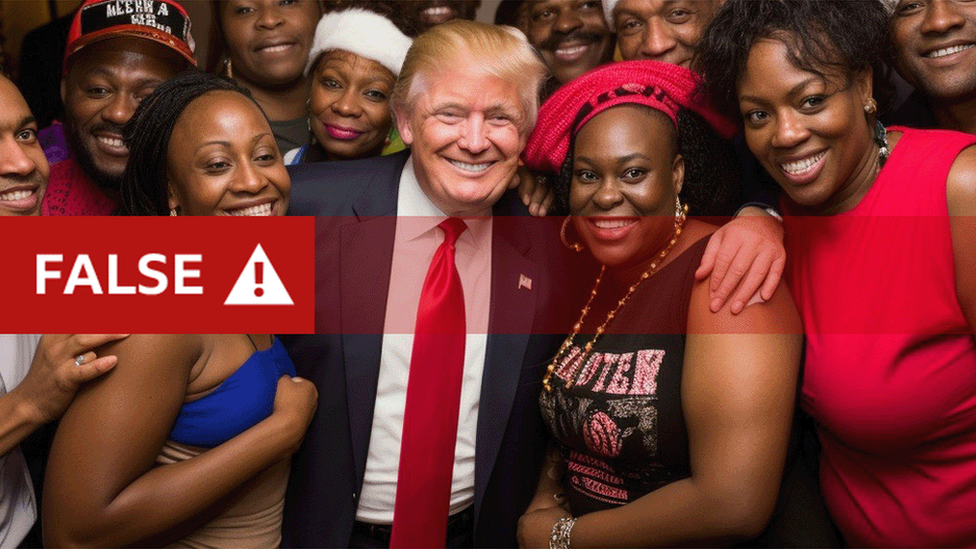
Dangerous conspiracist ideas continue to flourish over the internet and with popularisation of LLM AI tools and AI image creation a post-truth era has emerged. Maybe some will enter ‘Chapel Perilous’ like Robert Wilson and become ‘agnostic’ to fake news: trusting nothing we see or hear online, but it seems more likely that many might be led down a path of paranoia. It cannot be estimated the level of violence, fear and hate The Protocols have caused. Much like a virus conspiracy theories have mutated over time and context to produce more complex, subtle, and deadlier versions. This story of a book has straddled the border between truth and fiction and in this obscure zone dangerous beliefs have flourished.
Could Augustin Barruel or John Robinson have envisioned how far their conspiracies would go and how much violence they would unleash?
They might have not, though their contemporary the French philosopher Voltaire had a prescient warning when he wrote:
"Those who can make you believe in absurdities can make you commit atrocities."
[i] Thomas Milan Konda. 2019. Conspiracies of Conspiracies : How Delusions Have Overrun America. Chicago London University Of Chicago Press. p.11
[ii] Karen M. Douglas, Robbie M. Sutton, & Aleksandra Cichocka. The Psychology of Conspiracy Theories. Volume 26, Issue 6. (Sage Journals, December 7, 2017).
[iii] Richard Hofstadter. The Paranoid Style in American Politics and other essays. Harvard University Press, 1963. P.36
[iv] Karl Popper. The open society and its enemies (7th ed.). (Routledge, 2002).P. 352
[v] David Ludden. ‘Why Do People Believe in Conspiracy Theories?’ January 6, 2018. Psychology Today. https://www.psychologytoday.com/nz/blog/talking-apes/201801/why-do-people-believe-in-conspiracy-theories
[vi] Hofstadter. The Paranoid Style in American Politics and other essays. P.31
[vii] Manufacturing Intellect. “Slavoj Zizek Debates Jordan Peterson [HD, Clean Audio, Full].” YouTube. 2019. https://www.youtube.com/watch?v=qsHJ3LvUWTs.
[viii] And yes it fried my brain.
[ix] Umberto Eco. Ur-Fascism. The New York Review of Books, 1995.